

What Should a Newborn Wear to Sleep? A Guide for 0-3 Months
Figuring out what should a newborn wear to sleep can be surprisingly confusing. Newborns cannot regulate their body temperature as efficiently as adults, but adding too many layers can make them too warm. At the same time, loose blankets and extra bedding are not recommended for an infant's sleep space.
For most healthy, full-term newborns, the goal is simple: choose lightweight, fitted sleepwear that keeps your baby comfortably warm without overheating. A wearable blanket or sleep sack can provide additional warmth without placing loose bedding in the crib or bassinet. The American Academy of Pediatrics (AAP), CDC, and NIH Safe to Sleep campaign all recommend keeping babies from becoming overheated and keeping their head and face uncovered during sleep.
Here is how to choose appropriate sleep clothing for a baby from birth to 3 months.

What Should a Newborn Wear to Sleep?
A newborn can usually sleep in a fitted onesie, sleeper, pajamas, or similar infant sleepwear, with a wearable blanket or appropriately used swaddle added when necessary for warmth.
A practical rule is to dress your newborn in approximately one more layer than an adult would wear to feel comfortable in the same environment. The AAP uses this as a general guideline for dressing babies.
For example, depending on the temperature, your baby's sleep outfit might be:
-
A short-sleeve bodysuit
-
A long-sleeve bodysuit
-
Footed pajamas
-
A bodysuit underneath lightweight pajamas
-
Pajamas with a non-weighted sleep sack
-
A lightweight swaddle for a young newborn who is not showing signs of rolling
The exact combination matters less than how comfortably warm your baby actually is.
Should a newborn wear a sleep sack?
A sleep sack, also called a wearable blanket, can be a useful option because it provides warmth without requiring a loose blanket in the sleep space. The CDC specifically lists wearable blankets as an alternative when parents are concerned about their baby getting cold.
Choose a sleep sack that fits properly around the neck and shoulders and follow the manufacturer's size and temperature guidance. It should not be weighted.
If you’re finding a soft, lightweight option, a bamboo sleep sack can be worth considering. Bamboo-derived fabrics are often smooth and breathable, which may make them comfortable for newborn sleep, especially in warmer rooms. Always choose the sleep sack based on its TOG rating, fit, and the manufacturer’s temperature guidance rather than fabric alone.
A regular arms-free sleep sack is different from a swaddle-style sleep sack. Swaddle products restrict or contain the baby's arms, while standard wearable blankets allow the arms and body to move more freely.
Can a newborn sleep in a swaddle?
Many newborns find swaddling soothing, and swaddling can be used during the early weeks when done correctly.
A swaddled baby should always be placed on their back on a firm, flat sleep surface. The swaddle should not be weighted, should not cover the baby's face, and should not be so tight that it restricts normal hip movement or breathing.
Most importantly, stop swaddling as soon as your baby shows signs of trying to roll. Some babies begin attempting to roll at around 2 months, although development varies from baby to baby.
Once your baby begins showing these signs, switch to sleepwear that leaves their arms free, such as fitted pajamas with an appropriately sized regular sleep sack.
What fabrics are best for newborn sleepwear?
Breathable, comfortable fabrics such as lightweight cotton or bamboo-derived fabrics can be practical for newborn sleepwear, particularly in warmer rooms.
Whatever fabric you choose, prioritize sleepwear that:
-
Fits appropriately
-
Does not contain loose ribbons, strings, or accessories
-
Allows comfortable movement
-
Does not cover your baby's head or face
-
Can be adjusted by adding or removing layers as the room temperature changes
Sleepwear should also comply with the infant sleepwear safety requirements applicable where you live.
How to Dress a Newborn for Sleep Based on Room Temperature
Room temperature is more useful than the season when deciding what a newborn should wear to sleep. A heated bedroom in winter may be warmer than an air-conditioned room during summer, so always consider the baby's actual sleep environment.
There is also no need to keep adding clothing simply because your newborn's hands or feet feel cool. Instead, check their chest, upper back, or torso to get a better sense of whether they are comfortable.
Here is a general starting point:
|
Room temperature |
Possible newborn sleepwear |
|
24-27°C / 75-80°F |
Lightweight short-sleeve bodysuit or light pajamas; a lightweight sleep sack may be appropriate depending on its TOG rating |
|
20-24°C / 68-75°F |
Long-sleeve pajamas or a bodysuit with a lightweight sleep sack |
|
16-20°C / 61-68°F |
Bodysuit plus warmer pajamas and/or an appropriately rated sleep sack |
These combinations are examples rather than strict rules. Your baby's individual needs, sleepwear fabric, sleep sack insulation, air conditioning, and health can all affect how warm they feel.
If you use a TOG-rated sleep sack, check the manufacturer's instructions because recommended clothing underneath can differ between products. As one reference point, the NHS describes commonly available sleep bags as approximately 2.5 TOG for rooms of 16-20°C, 1.0 TOG for 20-24°C, and 0.5 TOG for 24-27°C.
How can you tell if your newborn is too hot?
Overheating is more concerning than slightly cool hands or feet during sleep.
The CDC and NIH recommend watching for signs such as:
-
Sweating
-
Flushed or unusually red skin
-
Skin that feels hot
-
A chest that feels hot to the touch
If your baby's chest or upper back feels hot or sweaty, remove a layer and reassess the room temperature.
Avoid judging temperature from the hands and feet alone. A newborn's extremities can feel cooler than the center of their body.
If your baby seems unusually hot, lethargic, unwell, or has a fever, check their temperature appropriately and contact your pediatrician or healthcare provider for guidance.
What Should a Newborn Not Wear to Sleep?
Knowing what to leave off can be just as important as knowing what to put on.
Hats and beanies indoors
Your newborn generally should not wear a hat while sleeping indoors. Covering the head can contribute to overheating, and Safe to Sleep specifically recommends keeping the baby's head and face uncovered during sleep.
Hats can be appropriate outdoors or in certain medical situations, but they should not be part of routine indoor sleepwear unless your baby's healthcare provider has specifically advised otherwise.
Weighted sleepwear or weighted swaddles
Do not use weighted blankets, weighted swaddles, weighted sleepers, or weighted sleep sacks for an infant.
The AAP, CDC, and Safe to Sleep guidance advise against weighted products for babies because of the pressure they can place on an infant's body and because they have not been established as safe for infant sleep.
Loose blankets
A blanket may seem like the easiest way to keep a newborn warm, but loose bedding should be kept out of the infant sleep area.
Instead, use appropriate clothing or a wearable blanket. The recommended sleep space is a firm, flat surface covered only by a fitted sheet, without loose blankets, pillows, toys, bumpers, or other soft items.
Too many layers
More clothing does not automatically mean safer or more comfortable sleep.
Overbundling can cause a baby to become too hot, and overheating is associated with a higher risk of sleep-related infant death. Dress your baby according to the temperature of the room and reduce layers if their chest or torso feels hot or sweaty.
Swaddles after signs of rolling begin
A swaddle that restricts the arms should no longer be used once your newborn begins showing signs that they are trying to roll.
This transition may happen within the 0-3 month period. The AAP notes that some infants begin attempting to roll as early as 2 months, so parents should watch the baby's development rather than waiting for a particular age.
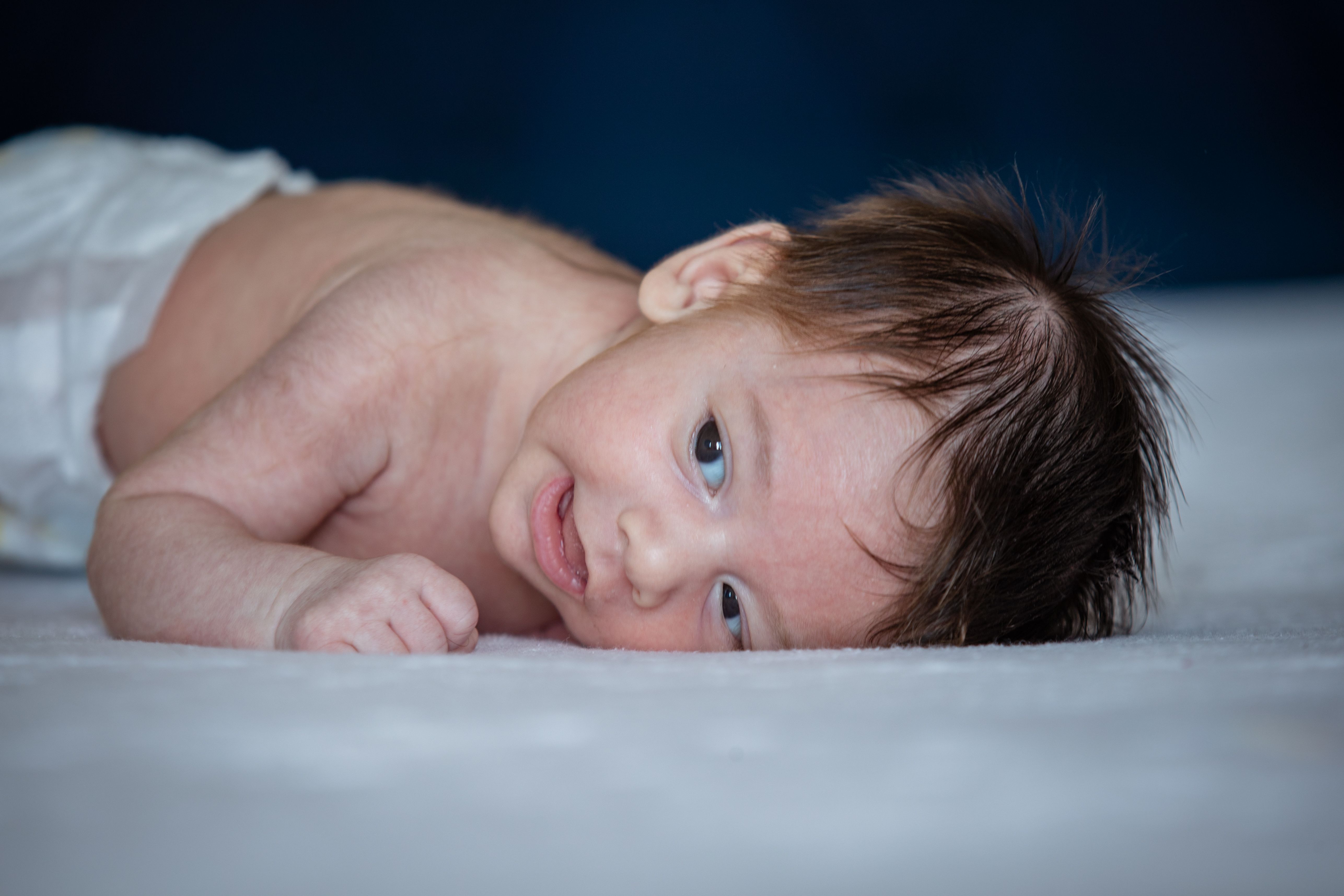
Stop using an arms-restricting swaddle once your baby shows signs of rolling
FAQs
Should a newborn wear a onesie under pajamas?
Sometimes, but not always.
In a cooler room, a lightweight onesie under pajamas may provide an appropriate additional layer. In a warm room, pajamas or a bodysuit alone may be enough.
Rather than automatically using two layers every night, choose clothing according to the room temperature and check your baby's chest or upper back for signs of overheating.
Should newborns wear socks to sleep?
Socks are generally unnecessary if your newborn is wearing footed pajamas or another outfit that already keeps their feet covered.
If you use socks, make sure they fit securely and are not so tight that they leave deep marks. Cool feet alone do not necessarily mean your baby needs another layer.
Can a newborn sleep in just a onesie?
Yes. In a warm room, a lightweight onesie or bodysuit may be enough for a healthy newborn.
The AAP notes that babies may need only a single layer in hot conditions.
Monitor your baby's torso rather than relying only on a temperature chart.
Does a newborn always need a sleep sack?
No. Sleep sacks are useful, but they are not mandatory.
Your baby may sleep comfortably in fitted pajamas alone when the room is warm enough. The purpose of a sleep sack is to provide wearable warmth without introducing loose blankets into the sleep environment.
How do I know whether my baby is cold at night?
Feel your baby's chest, stomach, or upper back. If their torso feels comfortably warm and they are otherwise behaving normally, there is usually no reason to add clothing simply because their hands feel cool.
If their torso feels cool, consider adding one appropriate clothing layer rather than introducing loose bedding.
Babies who were born prematurely, have a low birth weight, are ill, or have specific medical needs may require individualized temperature and clothing advice from their healthcare provider.
Conclusion
So, what should a newborn wear to sleep? For most babies from 0-3 months, the safest approach is simple, fitted sleepwear appropriate for the room temperature, with a properly fitted non-weighted sleep sack or age-appropriate swaddle when additional warmth is needed.
Avoid hats indoors, weighted sleep products, loose blankets, and excessive layers. If you swaddle, always place your newborn on their back and stop swaddling as soon as they show signs of trying to roll.
Most importantly, use your baby's body as your guide. Check their chest or upper back, adjust layers when necessary, and aim for comfortably warm rather than bundled up.
Along with appropriate clothing, always follow safe sleep practices: place your baby on their back on a firm, flat sleep surface and keep the sleep area free from loose bedding and soft objects.


