

Getting the nursery temperature right can feel surprisingly complicated when you have a newborn. Should the room be warm because babies are small? Is air conditioning okay? And how can you tell whether your baby is comfortable when their hands always seem cold?
For parents of babies 0-3 months old, the main goal is not to hit one perfect number on the thermostat. It is to create a comfortable sleep environment while avoiding overheating. Overheating is associated with a higher risk of sudden infant death syndrome (SIDS) and other sleep-related infant deaths, which is why major safe-sleep organizations advise parents not to overdress or overbundle babies.
So, what is the best room temperature for baby sleep? Some organizations recommend a specific range, while others focus more on your baby's comfort and clothing. Here is how to use those recommendations in everyday life.

Why Does Room Temperature Matter for Newborn Sleep?
Newborns depend on their environment, clothing, and caregivers to help them stay at a comfortable temperature. That makes both the room temperature and the number of layers your baby wears important.
The bigger safe-sleep concern is overheating. The American Academy of Pediatrics (AAP) advises avoiding overheating and head covering during infant sleep. It recommends dressing a baby appropriately for the environment, generally in no more than one additional layer compared with what an adult would comfortably wear in the same room.
The NICHD Safe to Sleep campaign also identifies overheating as a SIDS risk factor. Too many layers of clothing or bedding for the room conditions can cause a baby to become too warm.
This does not mean your newborn needs to sleep in a cold room. Instead, aim for a room that feels comfortably cool rather than hot or stuffy, then choose sleepwear that suits the actual temperature.
Room temperature is also only one part of safe newborn sleep. Babies should sleep on their backs on a firm, flat sleep surface without pillows, loose blankets, toys, or other soft objects in their sleep space.
What Is the Best Room Temperature for Baby Sleep?
There is no single internationally accepted thermostat setting that every parent must use.
The AAP does not specify an exact ideal room temperature. Its guidance focuses on keeping babies from overheating, dressing them appropriately for the environment, and watching for physical signs that they are becoming too warm.
The NICHD Safe to Sleep campaign similarly advises keeping the room at a temperature that feels comfortable to an adult and using appropriate sleep clothing rather than adding loose blankets.
The UK's Lullaby Trust provides a more specific guideline, recommending a room temperature of 16-20°C (approximately 61-68°F) for sleeping babies. It describes this range, combined with appropriate lightweight sleepwear or bedding, as comfortable for infant sleep.
So rather than treating one temperature as a strict requirement, think of temperature as part of a larger system:
Room temperature + baby's clothing + baby's actual body warmth = baby's comfort.
If your baby's room is around 16-20°C, that falls within the range recommended by The Lullaby Trust. If you live somewhere where maintaining that range is difficult, particularly in a hot climate, focus on preventing overheating and adjusting your baby's clothing appropriately.
Do not compensate for a cooler room by piling loose blankets into the crib. Likewise, if the room is warm, adding heavy pajamas, multiple layers, hats, or thick sleepwear can make overheating more likely. Safe to Sleep recommends using sleep clothing such as a wearable blanket when extra warmth is needed instead of loose bedding.
What about air conditioning?
Using air conditioning does not automatically make a room unsafe for a newborn. The important factors are the actual room temperature and whether your baby is dressed comfortably.
Avoid placing the crib or bassinet directly in front of a strong stream of cold air. A room thermometer can help you make decisions based on the temperature where your baby actually sleeps rather than the thermostat setting alone.
How Can You Tell If Your Baby Is Too Hot or Too Cold?
Your baby's body is often more useful than your thermostat when deciding whether to add or remove a layer.
Signs your baby may be too hot
Check your baby's chest or the back of the neck. According to AAP guidance, signs of overheating include:
-
Sweating
-
Flushed skin
-
Skin that feels hot
-
A chest that feels hot to the touch
If your baby's chest or neck feels hot or sweaty, remove a layer and reassess the room and sleepwear.
You do not need to wait until your baby is visibly sweating. If the room has become warmer during the night, adjusting clothing before your baby becomes uncomfortable can help prevent overheating.
What if your baby's hands and feet feel cold?
Cold hands do not necessarily mean your newborn is cold.
Babies' hands and feet normally feel cooler than the center of their bodies, so they are not a reliable place to judge overall warmth. Instead, feel your baby's chest or the back of their neck.
The skin there should feel comfortably warm rather than hot, sweaty, or clammy.
If your baby's chest feels cool, consider whether the room has become colder and whether another appropriate clothing layer is needed. Make adjustments gradually rather than adding several heavy layers at once.
Avoid hats indoors during sleep
A hat may seem like an easy way to keep a newborn warm, but routine head covering during sleep is not recommended. The AAP advises avoiding head covering because it can contribute to overheating.
For normal sleep at home, choose appropriate body clothing instead and keep your baby's head and face uncovered.
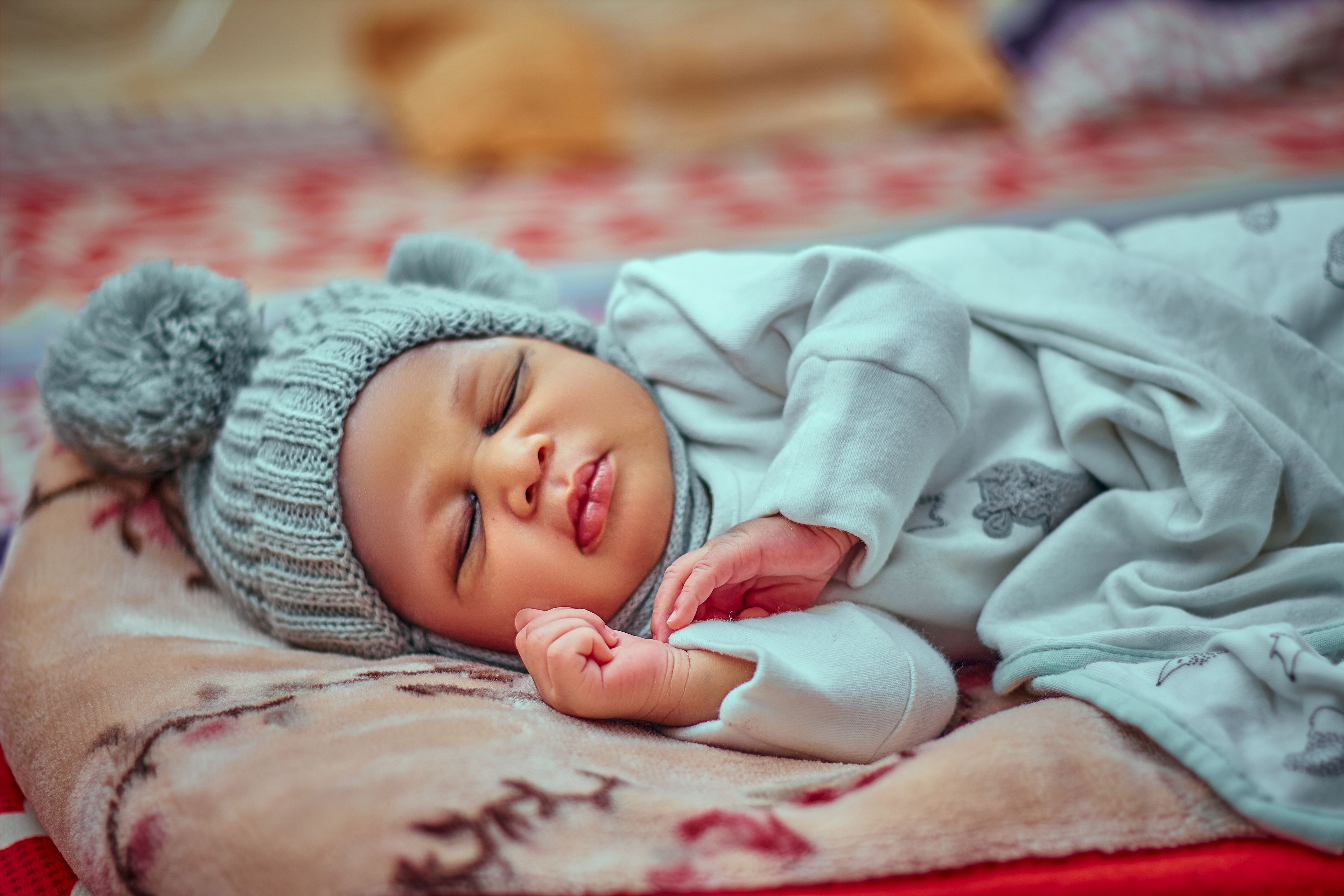
Avoid hats indoors during sleep
How to Monitor and Maintain a Comfortable Room Temperature
You do not need complicated nursery technology to manage room temperature. A few simple habits are usually more helpful.
1. Use a room thermometer
A room thermometer gives you an objective measurement of the area where your baby sleeps.
The temperature shown on a home's central thermostat may not perfectly match the nursery, particularly if the room receives direct sunlight or has different airflow from the rest of the house. The Lullaby Trust recommends using a room thermometer rather than relying only on how the room feels.
2. Check the temperature before sleep
Check the room before naps and bedtime, particularly during periods of very hot or cold weather.
Remember that temperatures can change overnight. A room that feels cool at bedtime may become warmer after several hours of heating, while an air-conditioned room may gradually become cooler.
3. Dress your baby for the room
Treat clothing and room temperature as two parts of the same decision.
As a general principle, the AAP recommends no more than one additional layer compared with what an adult would comfortably wear in the same environment.
If you use a sleep sack or wearable blanket, check the manufacturer's sizing, TOG rating, and temperature instructions. Do not assume that all sleep sacks provide the same amount of warmth.
Most importantly, avoid adding loose blankets simply because the room feels cool. Keeping loose bedding out of an infant's sleep space is part of recommended safe-sleep practice.
4. Make adjustments during hot weather
When the room becomes warmer, reduce unnecessary clothing layers.
The Lullaby Trust advises using lighter clothing and bedding when temperatures rise. If you use a fan, it can help circulate air, but it should not be aimed directly at the baby.
Air conditioning can also help maintain a comfortable environment. What matters is avoiding excessive cooling and dressing your baby according to the actual temperature.
5. Check your baby, not just the number
A thermometer is a tool, not the final answer.
Two babies in the same room may be comfortable in slightly different clothing. Regularly feel your baby's chest or the back of the neck, especially when trying a new sleepwear combination or when the weather changes.
The goal is a baby who feels comfortably warm, not hot or sweaty.
FAQs
Is 70°F too hot for a baby to sleep?
Not necessarily. The AAP does not define one exact maximum room temperature and instead recommends a temperature comfortable for the environment while taking steps to prevent overheating.
At around 70°F (21°C), pay attention to what your baby is wearing. Avoid unnecessary layers, and check the chest or back of the neck to make sure your baby does not feel hot or sweaty.
Is 68°F a good room temperature for a newborn?
68°F is approximately 20°C, which is at the upper end of The Lullaby Trust's recommended 16-20°C range.
However, the number alone does not determine whether your baby is comfortable. Sleepwear and your baby's actual body warmth should also guide you.
Should a newborn's room be warmer than an adult's room?
Not necessarily. Making a newborn's room excessively warm can increase the risk of overheating.
Safe to Sleep advises keeping the sleeping area at a temperature comfortable for an adult and dressing the baby appropriately rather than overheating the room or adding loose bedding.
Do babies sleep better in a cold or warm room?
The priority should be a comfortable, not overly warm sleep environment, rather than making the room deliberately cold or hot.
Temperature is also not the only factor affecting newborn sleep. Hunger, feeding patterns, day-night development, comfort, and normal newborn waking all play a role. For babies 0-3 months old, frequent waking is normal, so changing the thermostat should not be viewed as a way to make a newborn sleep through the night.
Conclusion
The best room temperature for baby sleep is not one universal number that works for every baby and every home. The AAP focuses on preventing overheating and recommends dressing babies appropriately for their environment, while The Lullaby Trust offers 16-20°C (61-68°F) as a practical recommended range.
For parents of newborns, the most useful approach is simple: monitor the room temperature, use appropriate sleepwear, keep your baby's head uncovered, and check their chest or the back of their neck to make sure they feel comfortably warm rather than hot or sweaty.
Most importantly, temperature should be considered alongside the rest of your baby's safe-sleep environment. Place your newborn on their back on a firm, flat sleep surface and keep loose bedding and soft objects out of the sleep space.
A comfortable room, appropriate clothing, and regular checks are more useful than trying to achieve a single perfect thermostat setting.


